

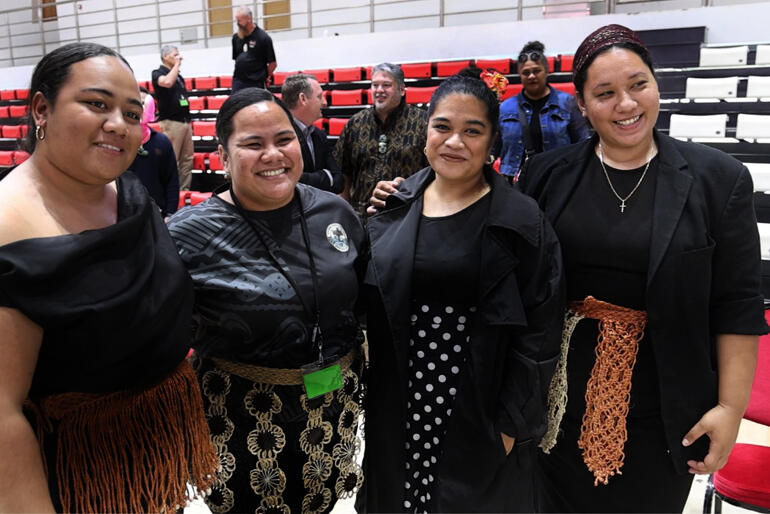
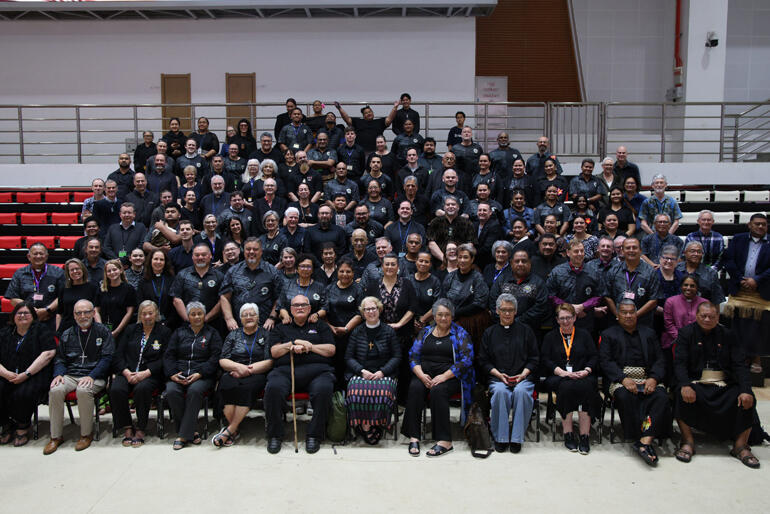

More than 120 Pacific Anglicans attending the General Synod Te Hīnota Whānui of the Anglican Church in Aotearoa, New Zealand and Polynesia dressed in black on the final Thursday of their Tonga-based meeting to stand in solidarity with survivors of rape or abuse in families, workplaces, churches and conflict zones around the world.
Among the crowd dressed in black were the three Archbishops of Aotearoa New Zealand and Polynesia: Archbishop Don Tamihere, Archbishop Sione Ulu'ilakepa and Archbishop Justin Duckworth, joined by ten more bishops, including the visiting US Episcopalian Bishop of Hawai'i, the Rt Rev Robert Fitzpatrick.
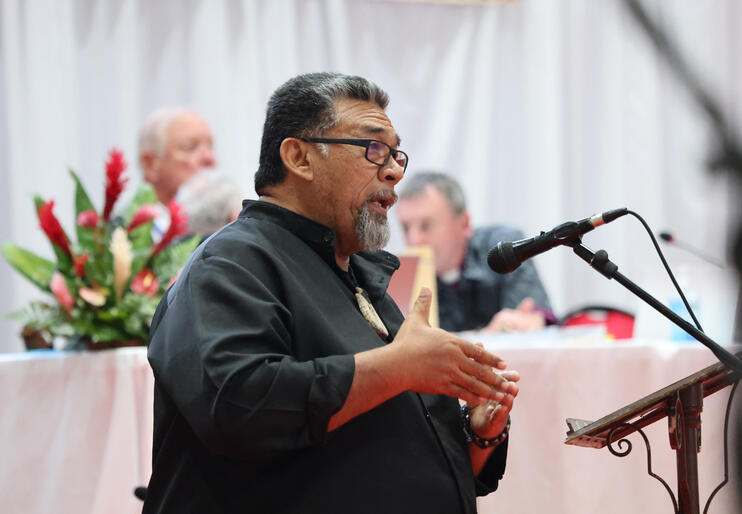
Vicar General of the Diocese of Polynesia, Mr Fe'iloakitau Kaho Tevi challenged Anglicans meeting in Tonga to wear black apparel as a message of support to anyone who lives with the reality of the family violence hidden in every community.
Fe'iloakitau has been aware of the #Thursdays in Black movement for many years, and has taken part through a number of Pacific Civil Society Organisations.
"I wanted our Church to join in this long-standing invitation to wear Black on Thursdays to stand against gender-based violence." he said.
Tongan Anglican leader in climate resilience, Elisiva Sunia turned up to Synod in black on Thursday 20 August.
"I think this is a positive idea because we need to bring to light what stories are hidden away, especially in families." she said.
Elisiva believes the social expectation of a father's right to rule leads to violence in some homes.
"Here in Tonga, in the nuclear family, men are acknowledged as the head of the family and what they say in the family most of the time is like a command."
"What they say – that is what you'll be doing."
"So doing this advocacy in the ecumenical movement is something that would encourage families to come out into the light and share what they're going through." she said.
The Reverend Canon Michael Tamihere who is Tumuaki of Te Rau Theological College was happy to step into black garb.
"As a Church that knows the power of tohu (outward visible signs) and what they mean, it's only right to live into the power of outwardly showing that we stand against gender-based violence and in solidarity with wāhine(women)." he said.
"Equally, what we wear needs to be consistent with how we speak and act. Wearing black on Thursdays is a karanga (call) to translate our whakapono (belief) into tangible action."
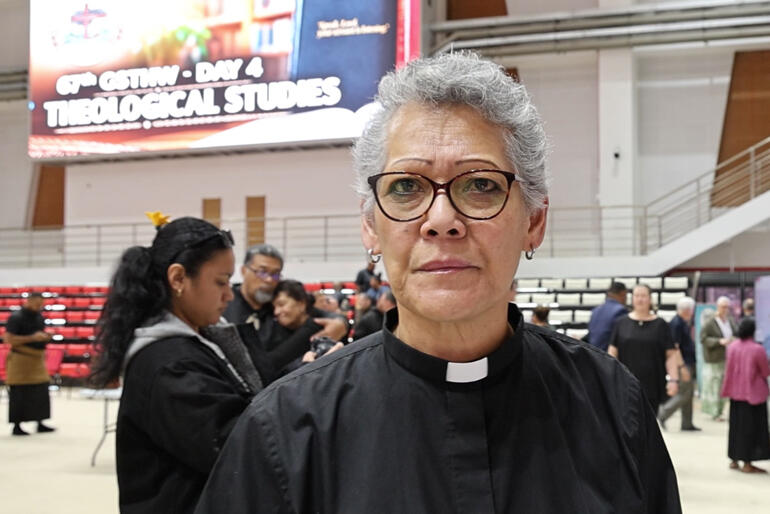
The Reverend Kofe Havea, a Tongan Anglican priest who serves in the Diocese of Christchurch in Aotearoa New Zealand, revels in the joys of being back in Tonga, but warns that her homeland, like every culture, needs to address the issue of family violence.
"I think it's important for the church to join the call to end violence against women and children because it's been repressed, especially here in the islands, for a long, long time."
"So us as a General Synod standing in union with Pacific Islanders, and acknowledging this is a problem everywhere, is vital for the growth of awareness, here in Tonga especially."
The Thursdays in Black campaign was established by the World Council of Churches following its Decade in Solidarity with Women (1988-1998) after female survivors of conflict zones raised the issue of rape as a weapon of war.
Since then churches and civil society organisations worldwide have adopted #Thursdays in Black as a stand in solidarity with people suffering rape and gender-based violence and to call for an end to cultures of silence on abuse.












Comments
Log in or create a user account to comment.