

The Anglican Church in Aotearoa, New Zealand and Polynesia has committed to developing a strategic response to AI. This will take into account the impact of AI technologies on physical, intellectual and spiritual aspects of human life.
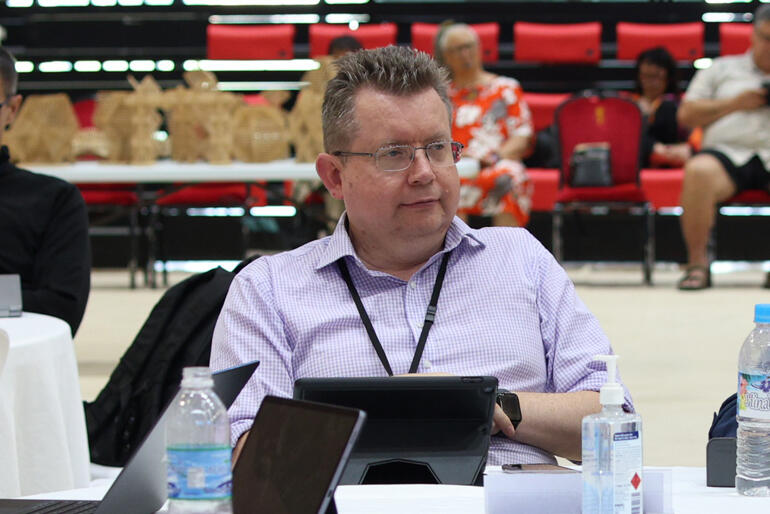
Tim Cross from the Diocese of Waiapu moved Motion #10 on Artificial Intelligence (AI) Technologies, seconded by Isaac Beech from Te Hui Amorangi ki te Tairāwhiti, which puts the wheels in motion for the Church to identify three-tikanga policy in this field.
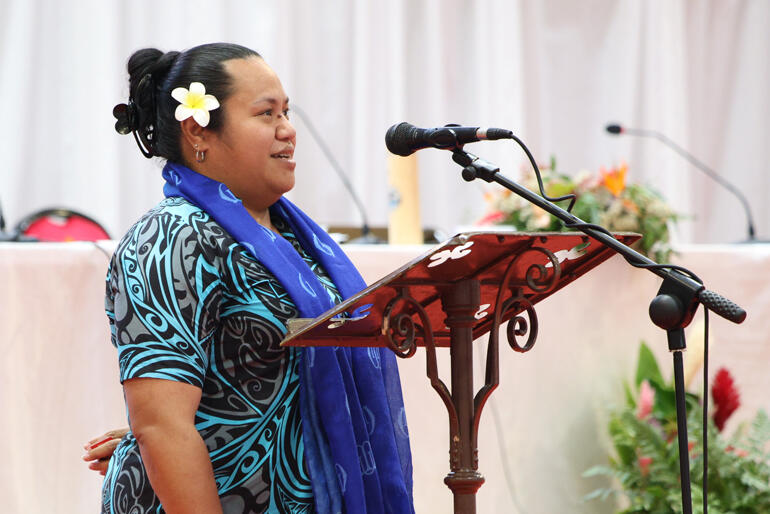
Diocese of Polynesia Anglicare Coordinator Namuaimana (Mana) Matalavea contributed to the drafting with a request to ensure the Church protects our traditional AI, the "ancient intelligence" of Indigenous Pacific knowledge systems.
The brief for the working group will include assessing the ethical and physical impact of AI on:
(i) the safety and protection of people, in particular those working in the AI industry, our children and future generations across our Three Tikanga,
(ii) our intellectual property and its sovereignty, including protection of our ancient intelligence
(iii) our environment in relation to AI systems and infrastructure, and
(iv) matters arising within the Anglican Communion
Mover of Motion #10 Tim Cross has worked in the IT sector for the last 25 years.
"Principally my job has been working with people to help make the most of IT, designing and developing software tools that enable confidence and control of data, information and technology for the benefit of people and communities," he said.
“AI presents a radically different variety of technologies that need to be better understood by our Church and wider society so we can measure the value they bring." he said.
"That means weighing up costs, risks and benefits. The technologies are very accessible today, but there are a lot of societal and environmental questions.”
The Women's Fellowship at Tim's suburban Otumoetai Anglican parish of St John's encouraged Tim to challenge the Church on the uses and misuses of AI today.
“As a visiting speaker at the fellowship group I was taken by their concerns for their children, grandchildren and great-grandchildren, the impacts on their own online safety ...and the very mixed messaging they see in the media." he said.
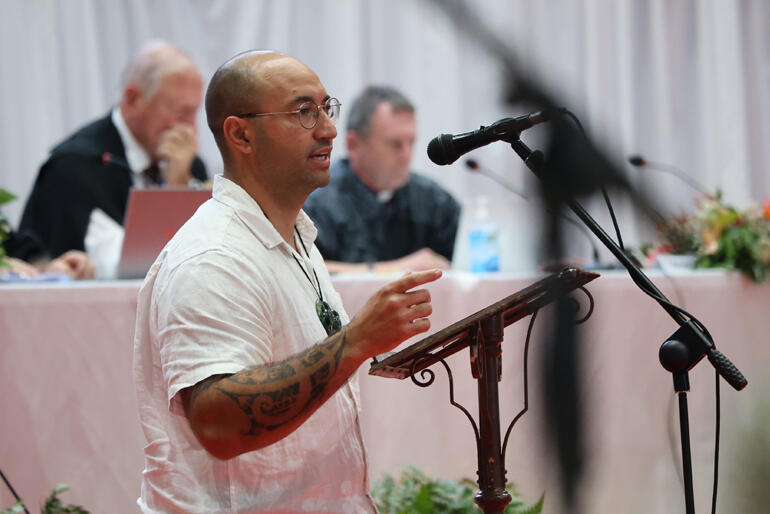
Seconder Isaac Beech believes the Church needs to engage deliberately and theologically with the questions AI raises.
"For Tikanga Māori, this includes bringing our understanding of tino rangatiratanga, mātauranga Mihinare and Te Oranga Ake into the conversation." he said.
"My hope is that this work will help the Church develop an informed and considered position on AI, recognising both its potential to advance human flourishing and our responsibility to challenge developments that undermine human dignity, equity and te oranga ake o te Hāhi, o te iwi, o te ao." he said.
Earlier at Tikanga Pākehā Conference, Mover Tim Cross and Bishop of Dunedin the Rt Rev Dr Anne van Gend talked about Church responses to new technologies.
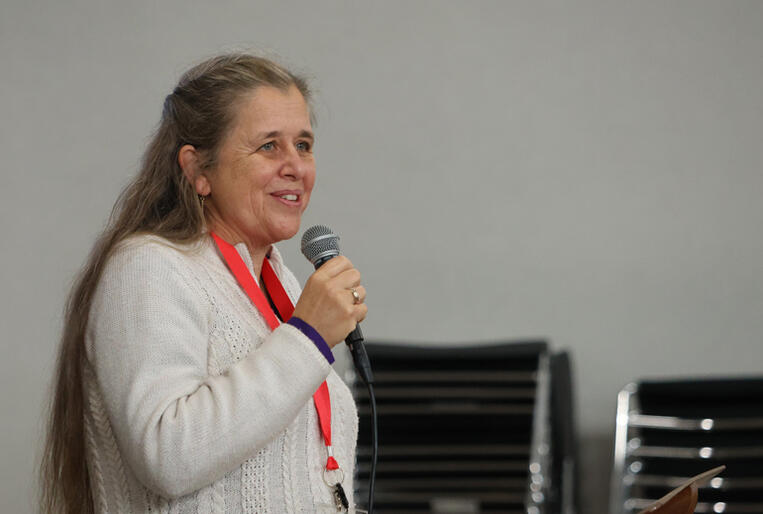
"Many people are writing and researching on the current impact of AI from environmental and social perspectives, but I think there's a space for us to approach it through the dual lenses of theology and the three tikanga church." said Bishop Anne, who encouraged Tim to bring the motion to Synod.
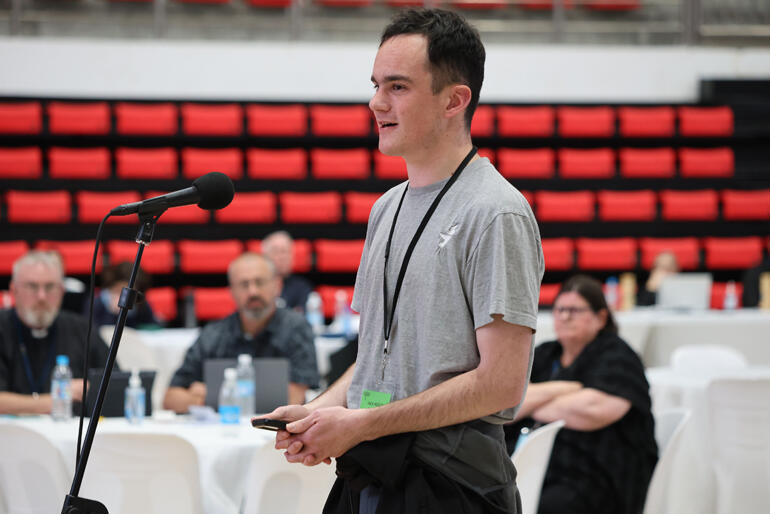
Diocese of Christchurch youth delegate Jack Hollis stood to affirm the motion, which he believes is essential work for the Church. He urges caution, but doesn't write off the value of Large Language Models, an often-used form of AI.
"They have really good uses, such as proof reading, summarising data (where privacy is not an issue) and in fields recognition (such as cancer screening) or generating lots of different iterations of something (such as developing new metal alloys)."
But Jack also sees disadvantages.
"It's not human and so when we give it human things to do, such as writing pastoral letters or sermons, considering theological issues, or making art, both we as people and the end product lose something from AI's involvement in the process.
"It also negatively affects our ability to think critically and deeply and to live well in reality and community."
Jack believes now is the right time to be proactive as these technologies already affect our lives as individuals and Christian communities.
"We need to use it wisely and with discernment, and within certain boundaries, lest we lose more than we gain."
Bishop Anne wants to pin down the theology of AI use. Referring to Pope Leo XIV's recent book 'Magnifica Humanitas', she wants to celebrate what it means to be human.
"What does our use of AI say about personhood? About identity? About the image of God in us? Or about the nature of relationships?" she asked. "What does it say about embodiment and the incarnation?".
The AI motion team met online last week to begin its work over the next two years, leading toward Te Hīnota Whānui 2028.
"We'd love to hear from people who can bring some knowledge to this from technological, tikanga or environmental perspectives, as well as theological." said Bishop Anne.
To contact the AI motion movers you can email: bishops.pa(at)calledsouth.org.nz











Comments
Log in or create a user account to comment.